
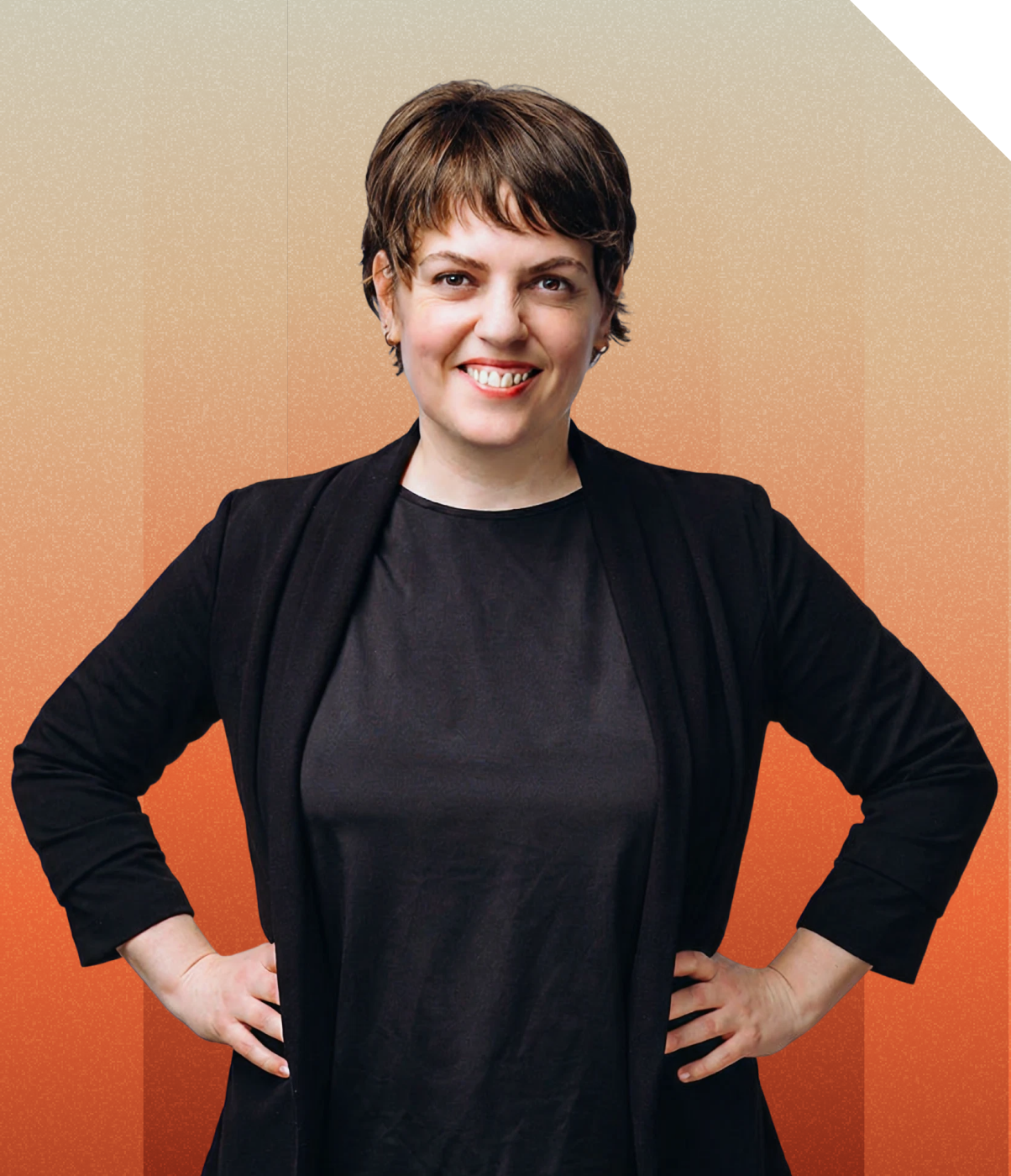
This article is the third in our series, “Women in Optimization.” Although these articles will highlight women, we hope the stories will encourage all individuals who might want to pursue a career in optimization.
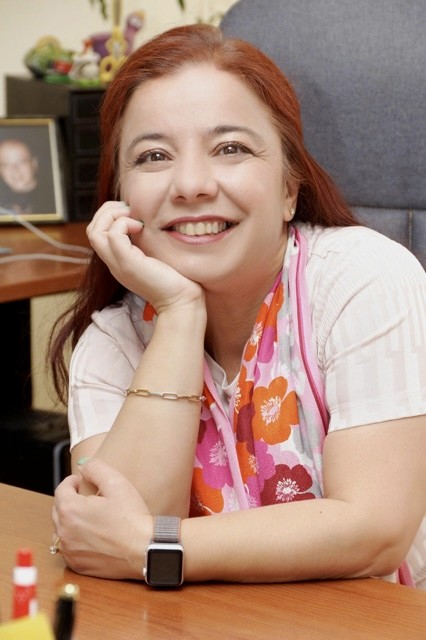
Using good OR to do good—that’s Dr. Bahar Kara’s personal motto, and over the course of her extensive career, that’s exactly what she’s done.
Although she has both a bachelor’s and master’s degree in industrial engineering from Bilkent University, Dr. Kara’s education has always maintained an operations research (OR) focus—a choice she credits to a beloved late professor.
“I am an engineer, but my education has always diverted toward optimization and OR. Right after I graduated, I immediately started my master’s program and PhD, and my advisor, who sadly passed away, was very well known in the OR domain. He kindly put me on this track,” Dr. Kara recalls.
In fact, it was this advisor who inspired Dr. Kara to pursue a career in academia. “When I started my master’s, I knew that I was going to become a professor, and I knew I wanted to do my PhD with my advisor,” she explains.
Optimization in Humanitarian Logistics
While her advisor was very focused on classical OR problems, upon completing her PhD, Dr. Kara began working on hazmat planning problems in Montreal, and it wasn’t long before she was receiving calls from municipalities looking for routing guidance.
“I realized that someone was paying attention to what I do, which motivated me. I decided that once I was back in Turkey, I would use my good OR to do good, because the country is very prone to natural disasters,” she says. “So now, instead of routing postal trucks, I route blood collecting vehicles. It fuels me with more passion for my work, and it’s even inspired many of my students to work with refugees or in disaster response.”
As a member of a special scientific council dedicated to earthquake preparedness, Dr. Kara has been working to create an efficient evacuation plan for the city of Istanbul in the event of a major disaster.
“I like doing research that touches real life, and that’s what I will continue to do,” Dr. Kara explains. “‘I’m just so glad that optimization and solvers are so good now that I don’t need to bother with developing algorithms—I just find a nice mathematical model and give it to a solver, because it solves it for me.”
Dr. Kara’s passion for solving humanitarian logistics challenges extends beyond her nine-to-five work.
“When I walk with my friends or grab a coffee, we talk about daily politics, and we try to come up with solutions,” she says. “Some people have an eye for photographs; maybe I have an eye for detecting [optimization] problems in daily life.”
Making Optimal Planning a Passion
Balancing professional and personal pursuits is a challenge many women are all too familiar with. In Dr. Kara’s case, she credits her success to a supportive partner, meticulous planning, and a bit of luck.
“I’ve been lucky, because my husband has been so supportive,” she shares. “He’s not in academia, but he’s managed to find jobs wherever I go. And after finishing my post-doctorate, I gave birth to my first daughter, so during my maternity leave I was between jobs. It was a combination of luck, but also planning—and I’d say it turned out well.”
This passion for planning is something that carries over into other aspects of Dr. Kara’s life, as well. There is no time wasted in her daily schedule—everything has a purpose.
“I try not to spend any minutes inefficiently,” she says. “So when I walk with my students, we’re talking about their research. When I go for a coffee, I do administrative or editorial work. And at home, if I’m walking the dog, I’m also calling my mom. So I’m always optimizing my time management.”
Choosing the Right Path
For a career that is both rewarding and meaningful, Dr. Kara encourages aspiring OR and optimization professionals to pursue topics that spark their interest.
“Since I love the topics I work on, I’m not unhappy when I get stuck on something,” she shares. “Of course, you will have challenges in your career, but if the topic is interesting to you, you will wake up thinking about solutions and feeling excited about your work.”
She also emphasizes the importance of finding a strong mentor: “Try to work with a professor who will really guide you,” she says. “Both my PhD and my post-doctorate advisors had huge impacts on my career and who I’ve become.”
Finally, her advice for women pursuing careers in OR and higher education: “As women, we face a lot of questions. Should you have a child? Yes, you should, if you want to. But of course, you can’t blame your PhD because you don’t have a family, and you can’t blame your kids because you couldn’t finish your PhD. You have to find the balance that works for you, make a decision, and go forward.”
Interested in learning more? You can read Dr. Kara’s latest work here. And keep an eye out for more Women in Optimization articles this year.
