
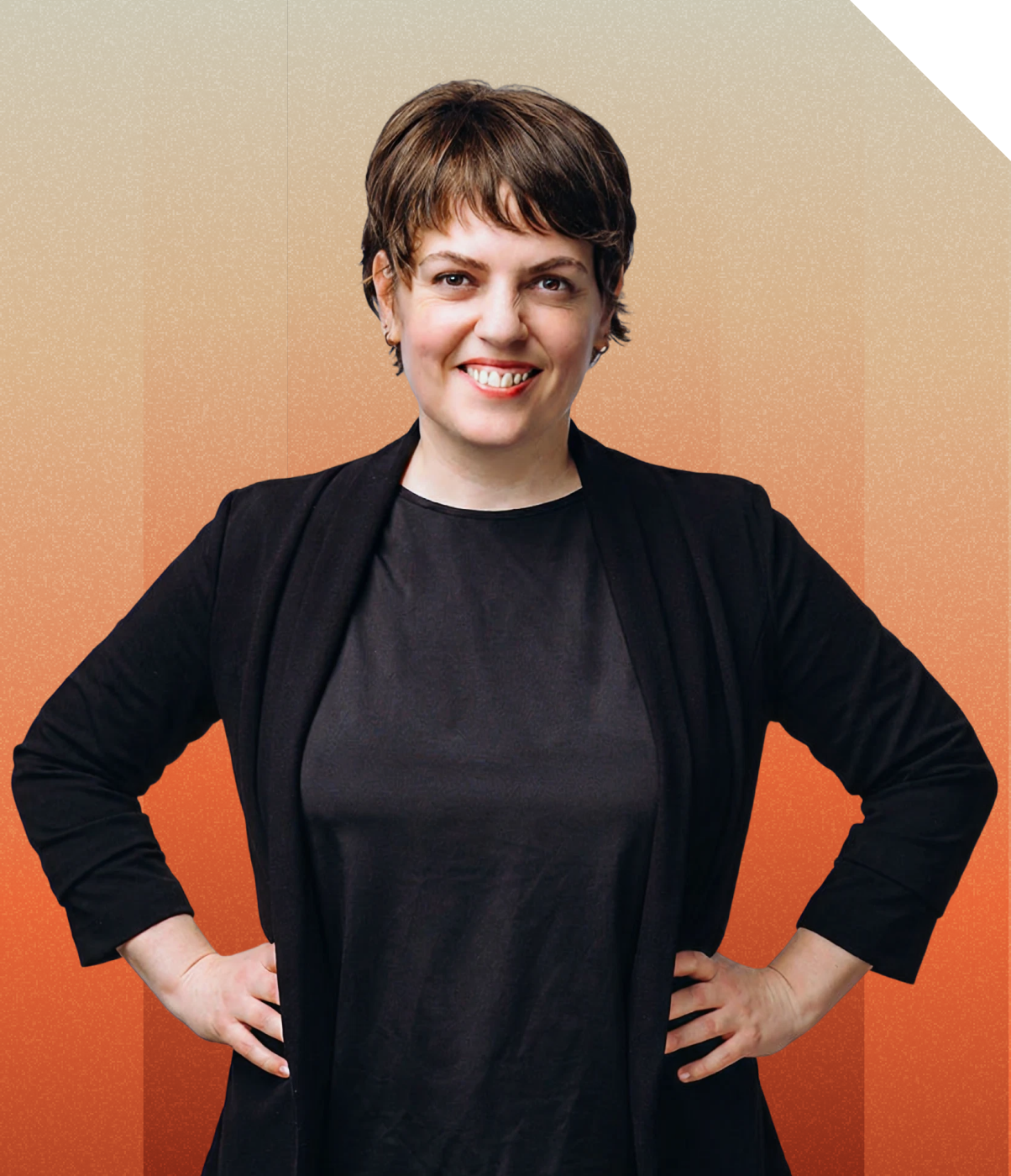
This article is the first in our new series, “Women in Optimization.” Although these articles will highlight women, we hope the stories will encourage all individuals who might want to pursue a career in optimization.
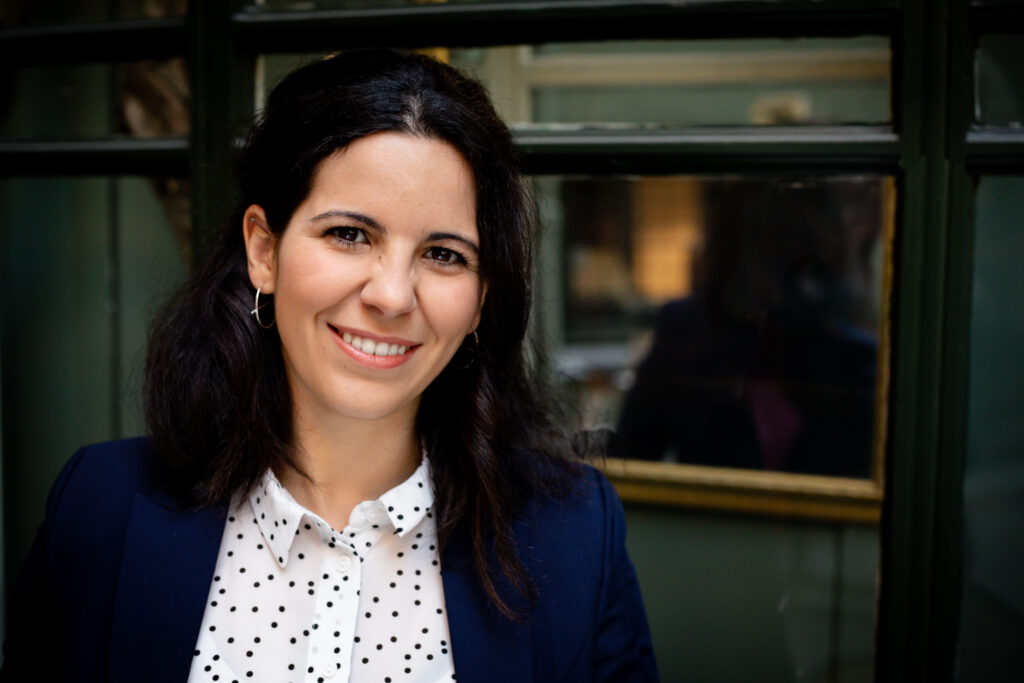
Some career paths begin with an inspiring university lecture, or a life-changing book. Some can be traced back to a childhood dream. For Martina Fischetti, it all started with a coffee.
Though she’s now a highly influential and award-winning researcher using optimization to solve some of today’s toughest sustainability challenges, Fischetti says that for many years, a career in optimization was a strict ‘no-go’ for her.
“My father works in optimization, in operations research,” she says. “So when I was a university student, I was convinced that I didn’t want the same career. I didn’t want to be ‘somebody’s daughter.’ I felt it was too close, that I would be too compared.”
But that all changed when she began working on her master’s thesis as an Erasmus student in Denmark. Over a coffee meeting, a professor from Aalborg University suggested an idea for her thesis: an optimization problem that would determine the ideal layout for maximizing the productivity of wind farms.
“I realized that I really like to solve those types of problems,” says Fischetti. “I like the idea of doing something very applied, where you can see the real impact of what you’re doing. So it was in this way that I found my way into operations research.”
The Best of Both Worlds: Blending Industry with Academia
Seeing the potential in her thesis, Fischetti and her company supervisor agreed that she should extend the project into an industrial PhD, in collaboration with the Swedish multinational power company Vattenfall.
Her goal was to identify the optimal placement of wind turbines and determine how best to connect them with cables. The resulting plans were actually used by the company to design the first non-subsidized wind farm ever constructed, as well as all of the company’s offshore wind farms. This helped them boost efficiency and save millions of euros. Results like that, Fischetti says, are what make the hard work worthwhile.
“It’s extremely motivating to see the impact of what you’re doing,” she notes. “I got to experience the best of both worlds—the dynamics of working in a company, mixed with an academic approach. This gives you a big advantage if you want to continue in the industry, because you are already equipped and know how the company works.”
Still, it’s not always easy to balance academia and industry.
“It’s a complicated relationship, because the company needs to be very open-minded, especially when it comes to publishing papers and sharing information on the methodology,” she says. “I was lucky enough to find people who saw the potential and believed in my project, pushed it forward, and got it fully validated by other teams.”
Shaping Policy with Optimization
The next phase of Fischetti’s multi-faceted career began when she was contacted by the European Commission’s Joint Research Center (JRC), which was seeking an operations research specialist to help them solve the largest problems in public transport throughout all member states.
With Fischetti’s help, the JRC, in collaboration with the University of Pavia, developed an algorithm to evaluate public transport performance based on the number of facilities that could be reached using all types of public transport. The tool is still used today to inform transport policies.
“This is what I’ve always loved about operations research,” she explains. “You have this flexibility to enter so many different markets and apply your knowledge and skills to such a wide range of problems.”
Following her work for the JRC, Fischetti recently started postdoctoral work at the University of Seville’s Research Institute of Mathematics (IMUS), where she uses machine learning and operational research applications to perform counterfactual analysis and explain fault detection in complex energy systems.
Although her work is still in very early stages, she hopes to develop this project further, “so that it can be not only another research project, but also have that angle of application—that is something I really value.”
A Career That Knows No Bounds
What started with a coffee has taken Fischetti from Italy to Denmark to Spain—from the private sector to academia to the world of public policy. So where will her illustrious career lead her next?
“I always say it’s very difficult to make plans in life, because really anything can happen. But at the moment, I’d like to pursue a career in academia and hopefully find my own way to mix it with industrial applications—which indeed, operations research allows you to do,” she says.
One thing her career path has taught her is the importance of taking chances and being open to different opportunities—wisdom she passes on to students and new researchers.
“Don’t be afraid of changes, because the reality is that you cannot truly plan for the future, so take what you can as it comes,” Fischetti says. “And always show your enthusiasm and eagerness to learn new things—because it will always be appreciated by your colleagues, and they’ll be even more motivated to work with you.”
Empowering a New Generation of Women in Research
Of course, being a woman in a male-dominated field hasn’t been without its challenges, which Fischetti acknowledges.
“It’s not easy to be a woman in STEM. Even today, we do face differences—some are more explicit than others, and some are more difficult to point to,” she says. “Sexism, unfortunately, still happens in the workplace, so it’s more important than ever that we speak up when we see it. That goes for all of us, men and women.”
Fischetti says that a lack of female representation in STEM has also been a source of difficulty throughout her career, but she doesn’t want it to stop new generations of researchers from pursuing their dreams.
“It won’t always be easy, but that’s why it’s so important that we make ourselves and our achievements visible, so we can show others what’s possible. So apply for that job,” she advises. “Even if you don’t think you check all the boxes—apply anyway, and show up to the interview and give it your all. Because we can do everything!”
Follow Martina Fischetti on LinkedIn to stay up to date on her latest projects and to learn more about her past research. And keep an eye out for more Women in Optimization articles this year.
