
Skip to Main Content
Webinar
An Introduction to Quantum Computing for Optimization Practitioners, Part I: Quantum Annealers
Part I of this presentation will focus on quantum annealers, as the connections to classical optimization are more direct.
June 25, 2025
10:00 AM - 11:30 AM PST
Webinar
An Introduction to Quantum Computing for Optimization Practitioners, Part I: Quantum Annealers
Part I of this presentation will focus on quantum annealers, as the connections to classical optimization are more direct.
June 25, 2025
10:00 AM - 11:30 AM PST
Webinar
An Introduction to Quantum Computing for Optimization Practitioners, Part I: Quantum Annealers
Part I of this presentation will focus on quantum annealers, as the connections to classical optimization are more direct.
June 25, 2025
10:00 AM - 11:30 AM PST
Event Recap
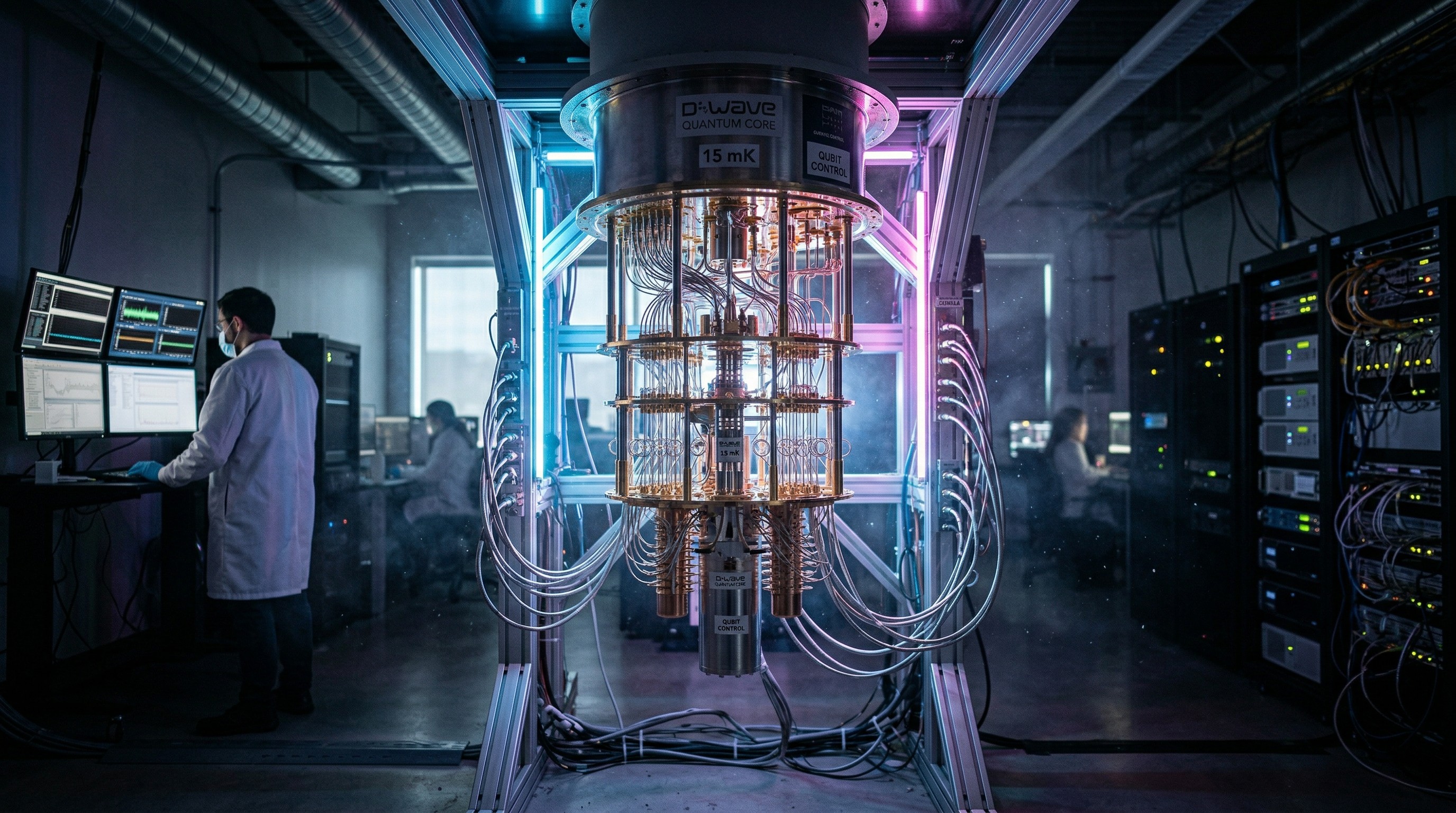
Quantum computers have received extensive publicity over the last 20 years, promising potentially major performance gains over classical computers for a range of industrial problems. However, while progress is being made, questions remain about how to translate the underlying theory into practical computers. The resulting debate between quantum enthusiasts and quantum skeptics can be difficult to navigate, especially for those who have little or no familiarity with the underlying concepts.
This tech talk will not take sides in the debate, nor make predictions about quantum computing capabilities of the future. Rather, it will try to present the technical details of quantum computers in a way that resonates with mathematical optimization practitioners. It’s easy to overlook the connections between classical mathematical optimization concepts and quantum computing. However, many mathematical optimization concepts can offer guidance for solving challenging problems in a quantum computing environment.
Quantum computers fall into two categories: quantum annealers and logic gate quantum computers. Part I of this presentation will focus on quantum annealers, as the connections to classical optimization are more direct.
Stayed turned for Part II, planned for late July, where we’ll consider the logic gate architecture and the underlying linear algebraic concepts that are familiar to many optimization users.
Event Recap
Quantum computers have received extensive publicity over the last 20 years, promising potentially major performance gains over classical computers for a range of industrial problems. However, while progress is being made, questions remain about how to translate the underlying theory into practical computers. The resulting debate between quantum enthusiasts and quantum skeptics can be difficult to navigate, especially for those who have little or no familiarity with the underlying concepts.
This tech talk will not take sides in the debate, nor make predictions about quantum computing capabilities of the future. Rather, it will try to present the technical details of quantum computers in a way that resonates with mathematical optimization practitioners. It’s easy to overlook the connections between classical mathematical optimization concepts and quantum computing. However, many mathematical optimization concepts can offer guidance for solving challenging problems in a quantum computing environment.
Quantum computers fall into two categories: quantum annealers and logic gate quantum computers. Part I of this presentation will focus on quantum annealers, as the connections to classical optimization are more direct.
Stayed turned for Part II, planned for late July, where we’ll consider the logic gate architecture and the underlying linear algebraic concepts that are familiar to many optimization users.
Event Recap
Quantum computers have received extensive publicity over the last 20 years, promising potentially major performance gains over classical computers for a range of industrial problems. However, while progress is being made, questions remain about how to translate the underlying theory into practical computers. The resulting debate between quantum enthusiasts and quantum skeptics can be difficult to navigate, especially for those who have little or no familiarity with the underlying concepts.
This tech talk will not take sides in the debate, nor make predictions about quantum computing capabilities of the future. Rather, it will try to present the technical details of quantum computers in a way that resonates with mathematical optimization practitioners. It’s easy to overlook the connections between classical mathematical optimization concepts and quantum computing. However, many mathematical optimization concepts can offer guidance for solving challenging problems in a quantum computing environment.
Quantum computers fall into two categories: quantum annealers and logic gate quantum computers. Part I of this presentation will focus on quantum annealers, as the connections to classical optimization are more direct.
Stayed turned for Part II, planned for late July, where we’ll consider the logic gate architecture and the underlying linear algebraic concepts that are familiar to many optimization users.

Speakers
Meet Your Expert Speakers
Learn from the best in the industry.
Ed Klotz
Senior Mathematical Optimization Specialist

Dr. Ed Klotz has over 30 years of experience in the mathematical optimization software industry. He is a technical expert who, over the course of his career, has worked with a wide array of customers to help them solve some of world’s most challenging mathematical optimization problems. In his role as a Senior Mathematical Optimization Specialist on the Gurobi R&D team, Dr. Klotz works closely with our customers to support them in implementing and utilizing mathematical optimization in their organizations. He also interacts heavily with the R&D team based on his experiences with the customers.
Prior to joining Gurobi, Dr. Klotz was a member of the CPLEX development team of IBM. He was involved in product development, customer training, product documentation, and numerous other tasks, with a primary focus on delivering CPLEX customer support and leveraging his experiences with customers to help inform the R&D team about customer needs and product improvements. Dr. Klotz has extensive knowledge in linear programming, integer programming, and numerical linear algebra for finite precision computing. Using this knowledge, he was able to investigate customer support issues at the source code level and identify potential improvements in CPLEX, both in terms of performance and accuracy of computation.
Before joining IBM, Dr. Klotz was a principal technical support engineer at ILOG, Inc., and a mathematical programming specialist at CPLEX Optimization, Inc.
Dr. Klotz has presented at numerous conferences, workshops, and web seminars and published numerous papers on mathematical optimization. His interests are in all aspects of mathematical programming, with a primary interest in research that can impact mathematical programming software. He obtained a BA in Math and Economics from Oberlin College and a PhD in Operations Research from Stanford University.
Maliheh Aramon
Senior Optimization Engineer

Maliheh received her PhD in Operations Research from the University of Toronto in 2014. During her PhD, she studied the interdependency between long-term and short-term optimization decisions in the context of maintenance and scheduling problems.
Prior to joining Gurobi, she worked for 1QB Information Technologies (1QBit) as an Optimization Research Lead. Her work focused on developing algorithms and tools that enable organizations to leverage both quantum and classical hardware efficiently to solve real-world problems in the fields of life sciences, energy, and finance.
Maliheh is a keen reader and enjoys reading novels. She also enjoys hiking in the beautiful Vancouver mountains.
Speakers
Meet Your Expert Speakers
Learn from the best in the industry.
Ed Klotz
Senior Mathematical Optimization Specialist
Dr. Ed Klotz has over 30 years of experience in the mathematical optimization software industry. He is a technical expert who, over the course of his career, has worked with a wide array of customers to help them solve some of world’s most challenging mathematical optimization problems. In his role as a Senior Mathematical Optimization Specialist on the Gurobi R&D team, Dr. Klotz works closely with our customers to support them in implementing and utilizing mathematical optimization in their organizations. He also interacts heavily with the R&D team based on his experiences with the customers.
Prior to joining Gurobi, Dr. Klotz was a member of the CPLEX development team of IBM. He was involved in product development, customer training, product documentation, and numerous other tasks, with a primary focus on delivering CPLEX customer support and leveraging his experiences with customers to help inform the R&D team about customer needs and product improvements. Dr. Klotz has extensive knowledge in linear programming, integer programming, and numerical linear algebra for finite precision computing. Using this knowledge, he was able to investigate customer support issues at the source code level and identify potential improvements in CPLEX, both in terms of performance and accuracy of computation.
Before joining IBM, Dr. Klotz was a principal technical support engineer at ILOG, Inc., and a mathematical programming specialist at CPLEX Optimization, Inc.
Dr. Klotz has presented at numerous conferences, workshops, and web seminars and published numerous papers on mathematical optimization. His interests are in all aspects of mathematical programming, with a primary interest in research that can impact mathematical programming software. He obtained a BA in Math and Economics from Oberlin College and a PhD in Operations Research from Stanford University.
Maliheh Aramon
Senior Optimization Engineer
Maliheh received her PhD in Operations Research from the University of Toronto in 2014. During her PhD, she studied the interdependency between long-term and short-term optimization decisions in the context of maintenance and scheduling problems.
Prior to joining Gurobi, she worked for 1QB Information Technologies (1QBit) as an Optimization Research Lead. Her work focused on developing algorithms and tools that enable organizations to leverage both quantum and classical hardware efficiently to solve real-world problems in the fields of life sciences, energy, and finance.
Maliheh is a keen reader and enjoys reading novels. She also enjoys hiking in the beautiful Vancouver mountains.
Speakers
Meet Your Expert Speakers
Learn from the best in the industry.
Senior Mathematical Optimization Specialist
Ed Klotz
Senior Optimization Engineer
Maliheh Aramon
Register Now
Explore What's Possible with Optimization
Register Now
Explore What's Possible with Optimization
Register Now
Explore What's Possible with Optimization
