
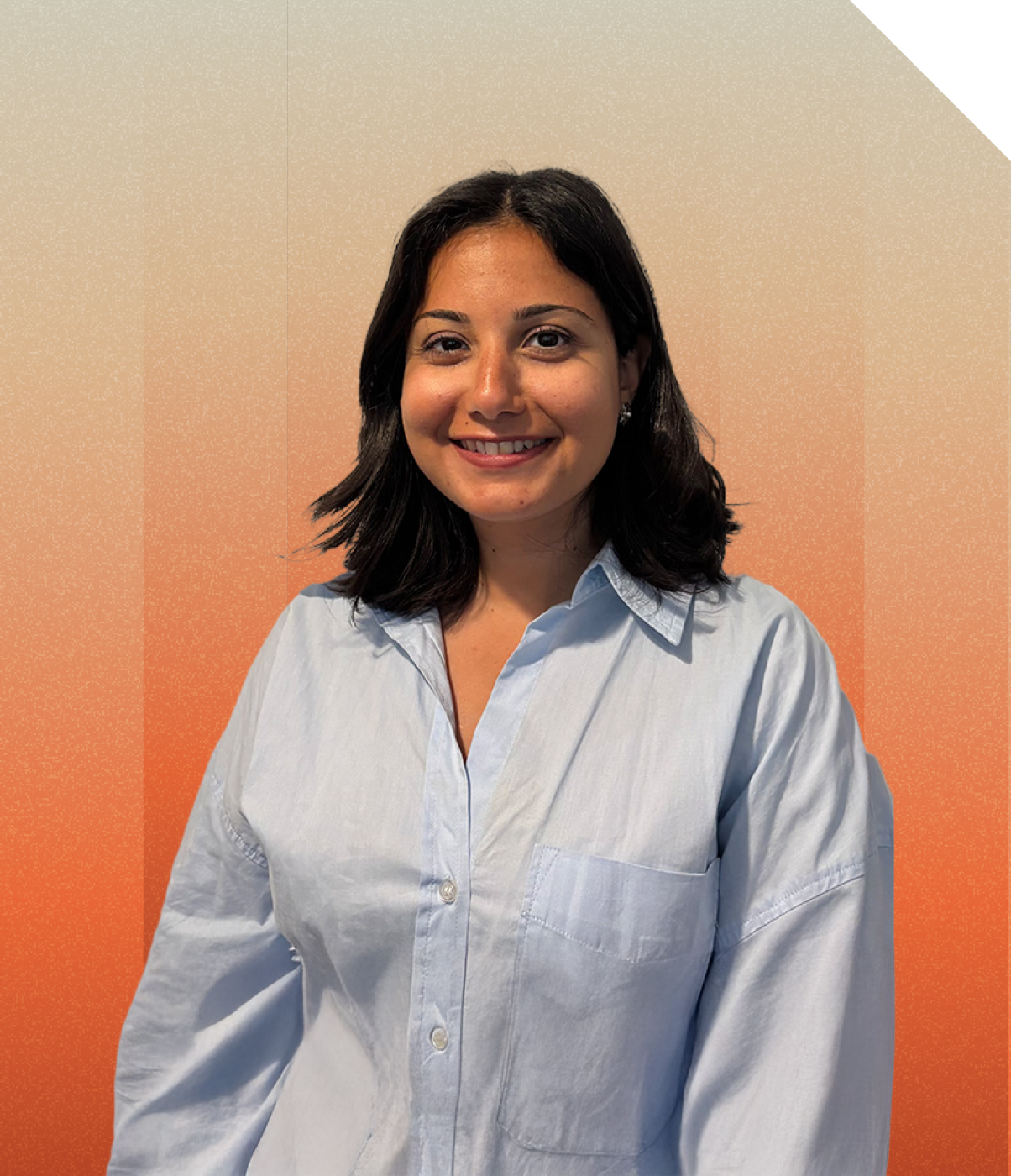
This article is the sixth in our series, “Women in Optimization.” Although these articles will highlight women, we hope the stories will encourage all individuals who might want to pursue a career in optimization.

Growing up, Kathryn Walter felt drawn to the U.S. military service academies, ultimately deciding to attend the U.S. Coast Guard Academy (USCGA).
She was excited about the long-term opportunities presented by the USCGA, and thought she liked boats enough to build her military career around them.
At the time, the Academy offered eight majors. A talented math student, Kathryn chose the one major offered by the math department: Operations Research (OR).
Kathryn had stumbled upon a gift, as undergraduate OR programs are rare. This gave her four years to build the knowledge and technical skills most OR students don’t learn until graduate school.
The summer before her senior year at the Academy, she secured an OR internship with the USCG Deployable Operations Group, where she was able to put what she had been learning in class directly into practice.
She spent the other half of that summer on a cutter (the term for a USCG ship), which confirmed something she had begun to suspect through her time at USCGA: she does not, in fact, like boats.
And the more she started learning about OR careers, the more she realized how unlikely she could have one in the Coast Guard. Unlike some of the other US military services, the Coast Guard does not have an OR career path. Most active-duty members who practice OR typically complete one tour (lasting two to four years) between getting a USCGA-sponsored master’s degree and returning to their established operational career paths.
In order to be a competitive applicant for the sponsored graduate school program, Kathryn needed to first establish that operational career—and perform well.
She had four potential paths for starting her operational career after the Academy: working on a cutter, attending flight school to become a pilot, preventing maritime disasters by doing things like ship inspections, or responding to emerging issues (such as conducting search and rescue cases).
The latter two paths would be at land-based units. She had no interest in flying, and learned that the ship inspection path would require multiple tours before graduate school became an option. Through process of elimination, she requested the response-oriented path, but had no guarantee of getting it.
Operations Research and Staying on Land
Upon graduation, the Coast Guard only assigned 9 of the 229 graduating students to land-based units. Fortunately, Kathryn was one of them.
She ended up in a command center, responding to search and rescue (SAR) cases. While not officially an OR job, she was able to put her OR skills to use. SAR cases involve analysis in two discrete phases: simulation of where the missing party is likely to be, and optimization of the response (e.g., target area, asset allocation, search patterns).
As a team lead, she used the simulation application called SAROPS, setting up models and coaching colleagues on how to deploy them effectively. She noticed that people were using the model without really understanding how it worked.
For example, some team members believed that if running the phase one simulation to create 1,000 points was good, running it for 10,000 points would make it more accurate. However, they would then be concerned about delayed responses. Kathryn showed them why more simulations did not usually lead to better decisions.
Leading these missions taught her how to work with incomplete information.
“You’ve got to make a decision based on what you’ve got,” Kathryn explains. “You have these tools, but you can’t sit there and run a ton of simulations. You do the simulation one time. Maybe you get updated information. And you have to start making decisions with this mystery.”
She would rely on this skill as she figured out her own journey.
Finding a Path to the Private Sector
Search and rescue was rewarding. But Kathryn was unlikely to receive another SAR-related assignment soon, and she was concerned about her long-term satisfaction in the service. She also knew that private-sector OR roles required a graduate degree.
Luckily, the Coast Guard offers opportunities to attend graduate school full-time, and incur obligated service based on the amount of time spent as a student. As an Academy graduate, Kathryn already owed five years of active-duty service. She wanted to minimize additional obligations, and she had strong skills from her undergraduate training, so she earned her Master of Science in Operations Research from Columbia University in just two semesters.
After graduating from Columbia, the Coast Guard assigned her to the Office of Strategic Workforce Planning and HR Analytics at USCG Headquarters in Washington, DC, for what they intended to be her only OR job. In this role, she encountered OR problems: linear regression, significance testing, Markov chains—it was all there.
She also encountered a common challenge for OR professionals: running models and using data in ways most people aren’t familiar with. She was becoming adept at finding OR applications and coaching colleagues on how to use them.
Transitioning Out of the Military
The HR assignment was Kathryn’s last tour with the Coast Guard. Having completed her obligated service, and not seeing a future in OR while in the military, she resigned her commission to pursue a long-term career in operations research.
Through networking at an INFORMS conference, she landed a role as an analytics and optimization consultant at ORTEC. In addition to conducting optimization analysis for energy supply chains, she developed corporate training programs. Once again, she was coaching companies on how to apply OR to their systems.
While the role was rewarding, she discovered that consulting was not the right fit. She didn’t like being constrained by contracts or worrying about business development.
Additionally, her husband was still in the Coast Guard. By the time she decided to look for a new job, he was almost three years into a four-year tour; she did not know where they would be living a year later. So, she created constraints for her search:
Must be in operations research
Must not be consulting
Must be something she could relocate with
Finding the Perfect Fit
One day during her search, Kathryn received a LinkedIn message. A recruiter was filling a position at a utilities company in Spokane, WA, that matched her profile. Although it was not initially a remote position, the recruiter reached out a few weeks later to let her know that the employer, Avista Utilities, was open to a remote role.
The recruiter told her how Avista created its own application based on mixed integer programming for better decision making, and that they were ready to hire their first in-house OR professional.
As she spoke with the team, Kathryn realized the role they were describing was exactly what she had been looking for. Now at Avista, she identifies OR solutions to business problems and coaches her colleagues on how to use custom tools to solve them. Her whole career prepared her for this.
Working directly for a company suits her well.
“Being in-house, if I see a problem, I just go fix it,” she explains. “There’s no, ‘Is it in the scope of the contract?’ No, I just go fix it. I’m just going to talk to someone and figure it out.”
How Operations Research Is Like Yoga
Outside of work, Kathryn is a trained yoga instructor. She earned her certification while in the Coast Guard and teaches at veterans’ organizations.
Her philosophy in yoga, and in life, is to meet people where they are. Sometimes she plans a challenging class, but her students need something meditative—so she pivots. The same is true with OR.
“I can make beautiful models, but if no one’s going to use a model, why does it matter? I make the models that are going to make sense, going to make a difference for people, and help them do their jobs better.”
She compares growing a company’s OR practice to starting yoga. “People believe they have to have fancy yoga pants. No, no, not at all. But there’s this idea that you do,” she explains. “But you don’t have to do this. Just wear whatever you can move in and start with what you have, where you are.”
The same is true with OR. Companies may think they need to hire a whole team. But they can start small, with one OR professional, or perhaps one project. As they improve and grow, maybe hiring more staff or investing in a more advanced solution will make sense—but the key is getting started and finding out over time.
Advice to Her Younger Self
If Kathryn could talk to her younger self, she would say, “You’re gonna be OK.”
As she started her career, she was surrounded by others in the Coast Guard who gave her advice on how to succeed in the service, and often had no concept of a career existing outside of it. Many did not understand why she would leave, and tried to talk her into roles that were outside of OR. She found their advice discouraging, and it did not fit her goals.
Fortunately, Kathryn found what she needed in each role:
Search and rescue taught her to make decisions with imperfect information.
Graduate school showed her she was already capable.
HR analytics honed her skills in identifying OR problems.
Consulting strengthened her training abilities.
Yoga taught her to meet people where they are.
Like her yoga pants analogy, Kathryn started with what she had: a love of math and an OR degree. By embracing life as it comes, she built an OR career where there was none readily available. And she avoided boats.
