

Introduction
ZOZO, Inc. (“ZOZO”) operates the Japanese fashion e-commerce "ZOZOTOWN." At its proprietary logistics centers, which are known as “ZOZOBASE,” the company manages the entire logistics process—from inbound receiving and inspection to photography, storage, picking, packing, and shipping.
As ZOZOTOWN began the phased rollout of two new logistics centers, the overall storage capacity structure across the centers in the Narashino and Tsukuba areas changed significantly.
As a result, ZOZO needed to allocate inventory and operational workloads across facilities in a way that ensured stable operations over the long term.

The Problem
After the launch of the new logistics centers, ZOZO realized that allowing inventory or operational workloads to concentrate at specific facilities posed long-term operational risks.
Achieving the right balance across facilities required more than simply distributing inventory evenly—it also meant accounting for the processing demands of core logistics operations, including inbound receiving, inspection, and outbound shipping.
Most ZOZOTOWN orders are fulfilled in a single shipment. When items that are frequently bought together are stored at different facilities, they must be transferred between locations before shipping—adding cost, time, and operational complexity.
To achieve stable and scalable operations, ZOZO needed a proactive and data-driven approach that could minimize unnecessary inter-facility movement while maintaining balanced utilization across its network.
To address this challenge, ZOZO Research developed an inventory allocation model using mathematical optimization.
Solution
Rather than modeling individual customer orders, the team aggregated historical order data at the shop level. This approach enabled the model to identify purchasing patterns and incorporate them directly into the objective function—minimizing the number of orders that would require fulfillment across multiple facilities. In practice, this meant allocating shops that are frequently purchased together to the same logistics center whenever possible.
The model also incorporated a range of operational constraints to reflect real-world limitations, including:
Capacity limits for each facility, covering both inventory volume and operational throughput (e.g., receiving, inspection, and shipping)
Constraints to prevent imbalances in inventory distribution and utilization rates across facilities
Based on these constraints, the team could identify inventory allocation strategies that balanced workloads while reducing costly inter-facility transfers.
Historically, ZOZO Research had primarily used open-source optimization solvers. During the evaluation phase, however, solving LP relaxations of MILP models was taking significantly longer than expected—prompting the team to evaluate Gurobi for its reliability and performance.
Through that process, they discovered that the bottleneck was structural: rooted in the problem itself rather than solver limitations. Gurobi's support for multiple LP algorithms—particularly the barrier method and simplex method—allowed the team to test different approaches, achieve substantial speed improvements, and ultimately deepen their understanding of the problem structure.
As a result, Gurobi was ultimately adopted for three reasons:
Reliable, consistent performance across problem types
Availability of multiple solution methods that can be selected based on problem characteristics
Access to expert support for troubleshooting
Today, the Gurobi Optimizer is a core technology for the optimization models developed as part of this initiative.
"With Gurobi, we can respond quickly to changes in constraints or rules, whenever feasible."
Ryusuke Chiyo, Research Scientist, ZOZO Research
Results
The framework proved its value across two facility launches. For the 2020 opening of ZOZOBASE TSUKUBA 2, the model addressed inventory allocation between the Narashino and Tsukuba areas. Rather than rebuilding the 2023 launch of ZOZOBASE TSUKUBA 3 from scratch, the team extended the existing model to incorporate additional equipment-related constraints, revised conditions for a larger facility network, and allocation logic across multiple Tsukuba-area facilities. This reusability enabled advanced validation and a stable operational design—even for infrequent, high-stakes events like new logistics center openings.
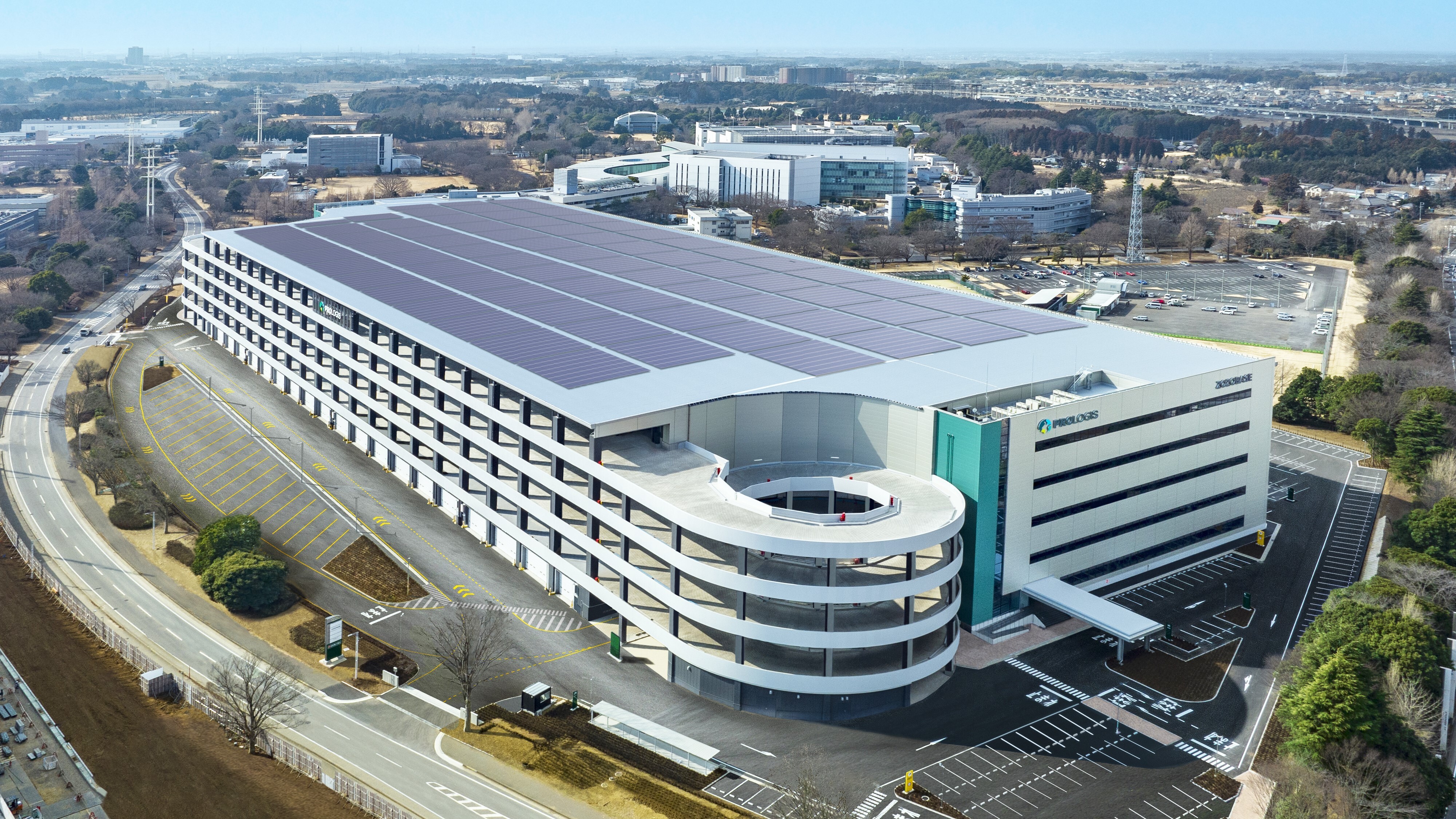
This has allowed ZOZO to:
Evaluate inter-facility balance of both inventory and operational workloads
Minimize inter-facility transfers using data-driven inventory allocation
Establish an objective decision-making process that incorporates business rules and assumptions
Develop a scalable and reusable optimization approach applicable to future facility launches
“We believe the greatest strength of a mathematical optimization solver lies in the speed with which an initial solution can be obtained,” says Ryusuke Chiyo, Research Scientist at ZOZO Research. “With Gurobi, we can respond quickly to changes in constraints or rules, whenever feasible.
ZOZO Research continues to explore, evaluate, and implement applications for mathematical optimization across the company—extending well beyond just inventory placement at logistics hubs.
Moving forward, the company plans to leverage mathematical optimization to clarify operational challenges and support decision-making, contributing to even more improvements across business areas at ZOZO, Inc.